The Origins of Fireworks in Canada
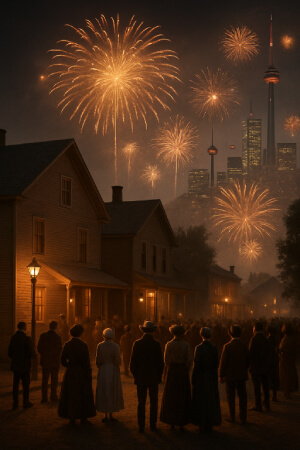
Fireworks first made their appearance in Canada toward the colonial age, hauled overseas by European settlers who learned the skill from the likes of France, England, and other European regions. Initially reserved for royal, military ceremonies, and civic occasions, the fireworks display became more common among the general public. The stages then were somewhat lower and more elementary if compared to today's performances, but that still caught the imagination of the viewers and freshened up the surroundings with excitement.
By the end of the 19th century, fireworks had gradually been tacked on public events like those marking Victoria Day, Canada Day (once Dominion Day), and other city festivals. The display of fireworks thus transformed into a way to signify unity, patriotism, and cultural legitimacy which turned them into more than entertainment by becoming a symbol of an experience that communities of any size could share.
Fireworks and Civic Pride
Cities across Canada quickly recognized the value of fireworks for fostering civic pride. Local governments and community groups often organized displays during fairs, festivals, and holiday celebrations. These events offered opportunities for residents to come together, enjoy entertainment in a shared space, and participate in rituals that reinforced social cohesion.
Civic celebrations often highlighted local landmarks or historical anniversaries, with fireworks serving as a dramatic punctuation mark. Beyond the visual spectacle, these displays represented ambition, creativity, and the community’s ability to stage memorable events.
Fireworks in Early Canadian Festivals
Even in the earliest public celebrations, fireworks played a central role in marking special occasions. Town fairs, seasonal harvest festivals, and religious holidays often included small pyrotechnic displays, providing both entertainment and a sense of occasion. These early festivals relied on local craftsmen and imported fireworks, creating spectacles that were eagerly anticipated by communities. The displays helped establish fireworks as a symbol of celebration, leaving a lasting impression that encouraged the integration of pyrotechnics into larger civic and national events over time.
Fireworks and National Holidays
Fireworks are especially associated with Canada’s national holidays, where they help mark moments of collective significance. They are most prominently featured during Canada Day on July 1st, but other holidays, such as Victoria Day, New Year’s Eve, and Remembrance Day, also see displays of pyrotechnic art.
Canada Day Celebrations
Canada Day has become synonymous with large-scale fireworks displays, especially in major cities like Ottawa, Toronto, Vancouver, and Montreal. The tradition of lighting up the sky on July 1st symbolizes national unity and pride, bringing together people from diverse backgrounds to celebrate shared identity.
Modern displays are often synchronized with music, storytelling, or themed performances, blending artistic creativity with technical precision. The spectacle is designed to evoke emotion, create lasting memories, and offer a sense of collective celebration that extends beyond the physical event.
Victoria Day and Seasonal Festivals
One may note the old custom of fireworks in Canada on Monday, May 24, in order to mark the auspicious Victoria Day, which properly started when the Queen was celebrated actually in birth (even though arguably recognized differently) with parades, concerts, and parties. It became assumed, with no question, albeit unilaterally, that fireworks would be part of the festivity: fireworks are just indicative of the start of the summer and a medium to share in a community cultural moment.
Many regional festivals also have incorporated fireworks displays; fireworks add seasonal sensory excitement, combining tradition, spectacle, and beauty.
Community Celebrations and Local Traditions
While national holidays draw large crowds, smaller community events are equally important in sustaining Canada’s fireworks culture. Local fairs, sporting events, cultural festivals, and municipal anniversaries often feature displays tailored to specific audiences.
Rural and Urban Communities
In rural communities, fireworks may be smaller-scale but no less meaningful. Residents gather in town squares, parks, or lakesides to enjoy displays that strengthen local identity and encourage participation across generations. In urban areas, professional pyrotechnic companies stage large, choreographed shows that attract thousands, reflecting both artistic ambition and logistical complexity.
These local displays also allow communities to experiment with themes, music, and timing, creating distinctive experiences that resonate with local culture. Whether simple or elaborate, the communal aspect remains at the heart of the celebration.
Cultural and Heritage Events
Many cultural and heritage events incorporate fireworks to honor traditions. Indigenous communities, immigrant cultural associations, and local cultural organizations often integrate pyrotechnics into festivals, bridging historical practices with contemporary celebration. These displays reinforce cultural storytelling, highlight achievements, and create shared moments of pride.
Fireworks also act as a visual symbol of inclusivity, demonstrating that celebrations can bring together diverse audiences while maintaining cultural authenticity.
The Evolution of Fireworks Technology
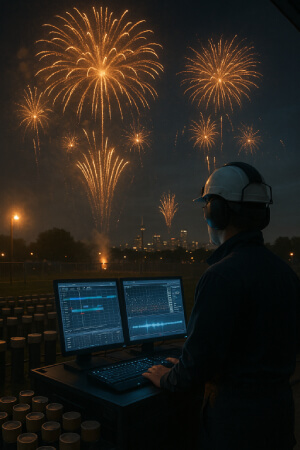
The fireworks of today are far removed from the early colonial-era displays. Advances in pyrotechnic technology, safety measures, and event coordination have transformed fireworks into highly controlled, artistic presentations.
Choreography and Music Integration
Modern fireworks often involve precise choreography, synchronized with music or narration. This approach transforms the display from a simple explosion of color into an immersive storytelling experience. Themes can reflect historical events, cultural motifs, or contemporary celebrations, offering audiences a multi-sensory journey.
Safety and Environmental Considerations
Safety remains a central concern in modern fireworks displays. Regulatory standards govern how fireworks are stored, transported, and launched. Event organizers work closely with municipal authorities to ensure spectator safety, protect wildlife, and minimize environmental impact.
Some communities are experimenting with eco-friendly fireworks, which reduce smoke and chemical residue while maintaining visual impact. These innovations reflect growing awareness of environmental responsibility while preserving the spectacle that audiences cherish.
Fireworks as Cultural Symbols
Beyond their aesthetic value, fireworks serve as powerful cultural symbols. They represent celebration, achievement, and collective joy. In Canadian society, they often mark milestones in civic, national, and personal life, reinforcing social bonds and shared values.
Celebrating Identity and Unity
Fireworks displays provide an opportunity for Canadians to express national pride. Whether in a large city or small town, the visual spectacle unites spectators in a shared moment of wonder. The tradition transcends age, language, and cultural background, creating a sense of belonging and collective memory.
Reflection and Commemoration
Certain events use fireworks for reflection or commemoration. For example, Remembrance Day ceremonies sometimes include symbolic pyrotechnics, combining visual artistry with solemnity. These displays honor sacrifice and history, demonstrating the versatility of fireworks as a medium for both joy and contemplation.
Fireworks in the Digital Age
Technology has expanded how Canadians experience fireworks. While physical displays remain central, digital tools now complement and enhance the experience. Live streaming, augmented reality, and social media allow more people to witness displays, even from afar.
Live Broadcasts and Online Access
Many large-scale fireworks events, particularly on Canada Day, are now broadcast online, allowing Canadians across the country to participate without attending in person. Schools, community centers, and households can stream the action in real time, joining national celebrations from wherever they are. These broadcasts often include multiple camera angles, commentary, and synchronized music, enhancing the viewing experience. By bringing events directly into homes, live streaming makes iconic celebrations more inclusive and ensures that distance does not prevent participation in important cultural moments.
Social Sharing and Community Engagement
Social media has added a new dimension to fireworks celebrations, enabling spectators to capture and share their experiences instantly. Photos, videos, livestreams, and hashtags turn individual observations into a collective narrative, creating shared memories across regions. Online platforms also allow audiences to interact through comments, reactions, and live discussions, enhancing the sense of connection. By blending personal storytelling with public celebration, social sharing extends the communal impact of fireworks, fostering engagement, discussion, and cultural participation even for those who cannot attend the events in person.
The Future of Fireworks in Canada
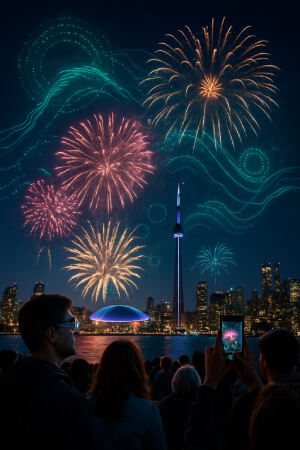
As celebrations continue to evolve, fireworks are likely to remain a central feature while adapting to new technologies and cultural trends. Hybrid events may combine physical displays with digital enhancements, offering both in-person and virtual participation.
Integrating Technology and Tradition
Future fireworks displays are likely to fuse cutting-edge technology with long-standing traditions. Innovations such as augmented reality overlays, projection mapping on landmarks, and music-synchronized pyrotechnics can create immersive, story-driven experiences. These enhancements allow organizers to tell richer narratives, link visuals to cultural or historical themes, and engage audiences in new ways. At the same time, the core excitement of fireworks, the sudden bursts of color, light, and sound, will remain central, ensuring that tradition and innovation complement rather than compete with each other.
Sustainability and Community Focus
Environmental awareness is reshaping how fireworks are designed and presented. Cleaner-burning shells, reduced chemical residues, and quieter pyrotechnics are emerging as priorities, minimizing both pollution and noise impact. Communities are also focusing on smaller, locally organized displays that encourage participation and inclusivity. By balancing spectacle with sustainability, organizers can offer meaningful celebrations that are safe, environmentally conscious, and accessible to diverse audiences. These approaches ensure that fireworks remain a cherished part of Canadian culture while responding to modern ecological and social considerations.
Fireworks as a Shared Cultural Experience
Fireworks are more than pyrotechnic displays, they are moments that bring Canadians together. Across generations, regions, and cultural groups, they serve as a common thread in celebrations, reflecting both heritage and contemporary culture.
By blending tradition with innovation, fireworks continue to inspire awe, mark important milestones, and strengthen community bonds. Whether viewed in person or online, they remain a powerful symbol of joy, unity, and the enduring spirit of Canadian celebrations.
Fireworks and Community
From the historically quaint civic celebrations to the modern projection mapping shows, fireworks in Canada have slowly turned key motifs through all developments, but their cultural significance is still well demonstrated.
Community builders, keepers of centuries-old traditions, heralds of identity-wordless forms, fireworks are heads and shoulders above other forms of expression in the state.
Technology and environmental concerns are likely to transform the celebration, according to which fireworks stand a good chance of being everlasting modulators of awe and collective experiences, truly giving birth to a new sky and common imagination of Canada.
Learn More
At the Canadian National Fireworks Association, integrity and safety come first. 🍁🎆
— CNFA: Canadian National Fireworks Association (@c_nfa) October 29, 2025
Our members are committed to upholding Canada’s world-class fireworks regulations, which are among the strictest and most respected in the world. Every CNFA member pledges full compliance with… pic.twitter.com/SbQIbjnP7x
Canada Day celebrations in full colour! ❤️🤍
— Lodging Ovations (@LodgingOvations) July 1, 2025
Scenes from today’s parade — happy Canada Day, everyone! 🇨🇦#CanadaDay #OhCanada #OnlyInWhistler #LodgingOvations #Whistler #WhistlerBC pic.twitter.com/9yvQvUgJuY